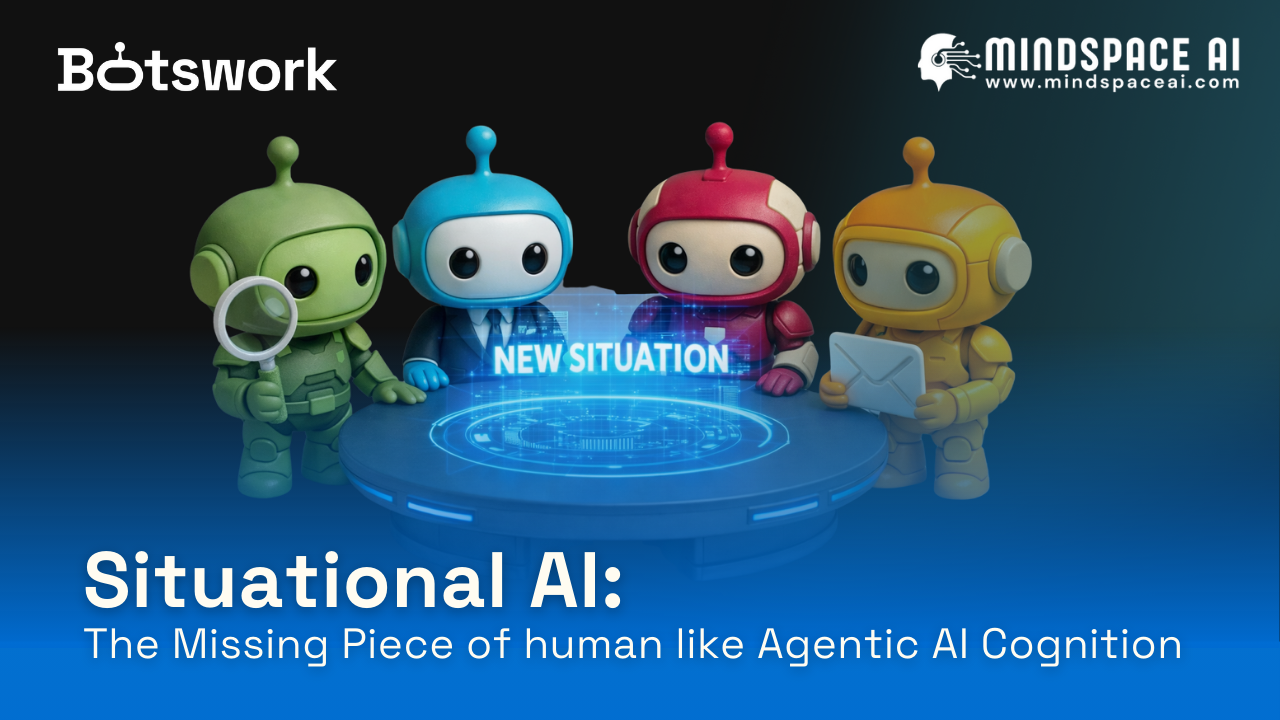
We've all experienced it: you ask an AI assistant a question and get an answer that is technically correct but completely misses the point. The information is right, but the context is wrong. That gap — between what you asked and what you actually needed — is the problem Situational AI was built to solve.
The Context Problem
Most AI systems today treat every interaction as an isolated event. They process your input, generate a response, and move on. There's no awareness of where you are, what you're doing, what happened five minutes ago, or what you're about to do next. They answer the words, not the situation.
Think about how a great colleague works. When you ask them a question during a crisis, they give you a fast, actionable answer. Ask the same question during a planning session, and they give you a thoughtful, detailed one. The question didn't change — the situation did. And they adapted.
What We're Building
Situational AI is our answer to the context problem. We're building intelligence that doesn't just process input — it understands the moment. Our approach focuses on three core principles:
- Environmental awareness — understanding the signals, patterns, and state of the world around the interaction
- Intent inference — going beyond the literal query to understand what the user actually needs
- Adaptive response — shaping the output to fit the situation, not just the question
Why Now?
The foundation models have matured to the point where raw capability is no longer the bottleneck. What's missing is the connective tissue — the ability to weave context into every interaction. The models are smart enough; they just need to be aware enough.
Advances in real-time data processing, edge computing, and multi-modal input have finally made it practical to build systems that sense and respond to context at the speed of conversation.
The smartest answer in the wrong context is just noise. Intelligence without awareness is incomplete.
What's Next
Over the coming weeks, we'll be sharing more about our approach — the architecture, the research, and the real-world applications we're most excited about. We'll also be opening up early access for teams who want to build with situational intelligence.
If you're interested in following along or getting involved, keep an eye on this blog and reach out through our contact page. We're just getting started.